What is the general climate of Amboseli?
Amboseli National Park, located in southern Kenya near the border with Tanzania, has a semi-arid climate that affects its national park weather. This means it is generally dry and doesn’t get a lot of rain throughout the year. The park lies in the rain shadow of Mount Kilimanjaro, which blocks much of the moisture from reaching the area, keeping it arid and contributing to the dusty park atmosphere.
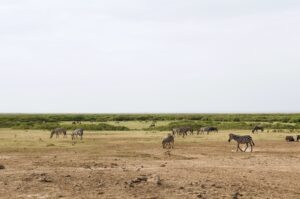
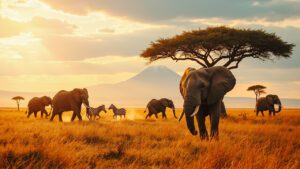
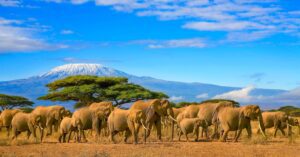
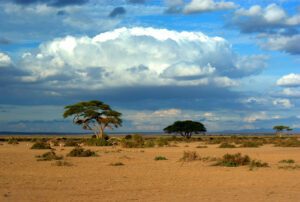
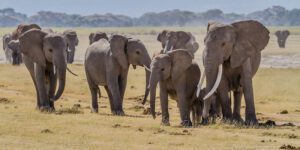
Despite this dry climate, Amboseli is characterized by open savannah landscapes, where large herds of African elephants roam. The ecosystem remains vibrant due to swamps and wetlands that are fed by underground water from Mount Kilimanjaro. These water sources make Amboseli a critical habitat for wildlife, allowing various species to thrive, even in the semi-arid conditions.
In simpler terms, you can think of Amboseli as a dry place with specific moist spots that support diverse habitants. It’s not a lush, green forest, but it’s not a harsh desert either. Instead, it’s somewhere in between, with the dry, dusty environment creating the iconic scenery of elephants crossing open plains, framed by the majestic Mount Kilimanjaro – one of Amboseli’s most famous sights.
What are the average temperatures throughout the year in Amboseli?
The temperatures in Amboseli National Park are mostly warm or hot throughout the year due to its location close to the equator. However, there is some variation between daytime and nighttime, as well as across different months. During the day, average temperatures typically range between 24°C (75°F) and 32°C (90°F). It can feel quite hot because of the dry air and direct sun exposure. In contrast, the nights in the national park are cooler, with temperatures dropping to around 15°C (59°F) to 20°C (68°F).
For example, the hottest months are usually February and March, when daytime temperatures can climb closer to 32°C (90°F) or slightly more. The coolest months are typically July and August, but even then, daytime temperatures remain between 24°C (75°F) and 27°C (81°F). This means that whether you visit during the cool or hot months, you can generally expect warm conditions with some relief in the evenings, especially during the rainy season.
What visitors notice most is the significant difference between daytime and nighttime temperatures. The hot days and cool nights highlight how the semi-arid environment retains heat during the day but loses it quickly after sunset. This is why dressing in light, breathable clothing during the day and packing a light jacket or sweater for the evenings is recommended for a comfortable experience in the park.
The climatic conditions in Amboseli National Park can vary, making it essential for guests to plan accordingly. The rainy months can bring refreshing rains that transform the landscape, while the dry spells offer clear skies ideal for game viewing. Regardless of the season, the park’s beauty and wildlife remain a significant draw for many travelers.
What is the rainfall pattern in Amboseli?
Rainfall in Amboseli National Park is generally low, irregular, and spread out over two rainy seasons during the year. This is typical of semi-arid areas, where water can be scarce but still arrives in short, intense bursts during specific months. The long rains occur between March and May, bringing heavier showers compared to the rest of the year. However, these rains are often followed by quick periods of sunshine, so it’s not rainy all the time, making the national park weather quite variable.
The short rains come between October and November, providing lighter precipitation that doesn’t last as long. Combined, the long and short rainy seasons contribute around 200 to 700 mm (8 to 27 inches) of rain annually, depending on specific areas in Amboseli. This rainfall is crucial as it replenishes the water in the swamps and wetlands that wildlife, including large herds of African elephants, depend on.
In the months between the rains, particularly June to September and December to February, Amboseli remains very dry. The dusty conditions during these dry months make the park feel like a true dry season, which can deter some visitors.
Despite the low rainfall, Amboseli is home to diverse habitats, and the climatic conditions can change rapidly. Even when it rains, the water tends to dry up quickly, as the ground absorbs the moisture slowly in semi-arid climates. Thus, Amboseli National Park retains its parched and dusty landscapes throughout the year.
This unique weather pattern makes Amboseli an intriguing destination for guests interested in game viewing. The park’s open savannah and woodlands provide excellent opportunities for wildlife observation, especially during the peak season when the wildlife is most active. Many travelers appreciate the affordability of visiting during the dry spells when crowds are thinner, allowing for total privacy while experiencing the beauty of this renowned African expert’s paradise.
What are the distinct seasons in Amboseli, and how do they differ?
Amboseli, located in southern Kenya near the border with Tanzania, has two distinct main seasons: the dry season and the wet season. These seasons are based on rainfall rather than drastic changes in temperature since the region has a tropical climate.
The dry season typically runs from June to October and then again from January to February. During this time, the weather is sunny and hot during the daytime, with temperatures often reaching 29–31°C (84–88°F). However, nights and early mornings can be cooler, sometimes dipping to around 18–20°C (64–68°F). This season is marked by clear skies and minimal rainfall, which causes water sources like waterholes or marshes to shrink. Vegetation is sparse, as the lack of rain dries out the grass and plants.
The wet season occurs from March to May (the “long rains”) and again in November and December (the “short rains”). During these months, Amboseli receives significant rainfall, especially in the “long rains” season. Temperatures are only slightly cooler compared to the dry season, but humidity levels increase due to the rain. The landscape becomes transformed during this time, with lush green grass covering the usually dusty plains, and waterholes and marshlands fill up again.
The two seasons affect the environment differently. During the dry season, wildlife gathers around the remaining water sources, making them easier to spot. In the wet season, animals are more spread out, but the scenery is stunning, and newborn animals are often abundant. The seasons overlap slightly, but their differences in rain patterns and vegetation growth make Amboseli’s ecosystem dynamic and lively.
When is the best time to visit Amboseli for good weather conditions?
The best time to visit Amboseli National Park is during the dry season, specifically from June to October and January to February. These months generally offer clear skies, low rainfall, and great conditions for wildlife viewing. Here’s why these times are ideal:
Dry seasons in Amboseli mean that water sources are scarce, so animals tend to gather around the park’s permanent water areas, such as the wetlands and remaining pools. This makes it much easier to see iconic African animals like elephants, lions, zebras, and giraffes together in one spot. Additionally, the dry savannah vegetation is thinner, making it easier to spot animals that might otherwise hide in dense bushes.
For travelers who enjoy activities like photography, the dry season has added benefits. The skies are usually clear, providing outstanding views of Amboseli’s most famous backdrop: Mount Kilimanjaro. This dormant volcano, which is snow-capped year-round, looks particularly breathtaking against the bright, sunny skies of the dry season, a dream scenario for photographers.
Rainfall can make roads muddy and difficult to navigate during the wet season, but the dry season means easier, smoother travel. The clear skies also ensure uninterrupted safari drives, and there is less risk of rain disrupting your plans.
However, keep in mind that the dry season is also the park’s peak tourist season. As a result, you might encounter more visitors during these months. But for wildlife enthusiasts and adventurers, it’s truly worth it to visit Amboseli during its driest and sunniest months. Just be prepared for slightly cooler mornings and evenings when temperatures drop.
How does the weather affect wildlife activity in Amboseli?
Weather in Amboseli plays a huge role in determining how and where animals behave, and it’s fascinating to see this in action. Depending on whether it’s the dry or wet season, wildlife activity in Amboseli changes dramatically.
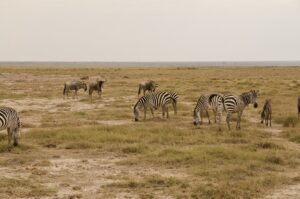
During the dry season, which runs from June to October and again from January to February, water sources dry up except for a few permanent areas, such as the swamps and waterholes fed by underground streams from Mount Kilimanjaro. Animals like elephants, zebras, wildebeest, giraffes, and antelopes all congregate close to these water sources because they need water to survive. Predators like lions and cheetahs also stay nearby since they follow the herbivores, making the dry season the perfect time for tourists to witness dramatic wildlife interactions like hunting.
In contrast, during the wet season (March to May and November to December), there is abundant rain, and water sources like seasonal pools and rivers appear throughout the park. This means animals have more options, so they spread out across the plains rather than gathering in one spot. Although spotting wildlife might require more effort in the wet season, it’s also a special time of year. The landscape turns green and lush, and many animals give birth during these months. You might spot baby elephants, zebra foals, and even young predators, it’s a sign of the ecosystem regenerating after months of dryness.
Weather even influences animal movement beyond Amboseli’s borders. For example, elephants are known to migrate outside the park during specific seasons in search of fresh food and water. This adds to the interconnectedness of the local ecosystem and shows how the environment and wildlife are closely tied to weather patterns.
What type of clothing is recommended for Amboseli’s weather?
Amboseli’s climate is generally warm and dry, but it can vary between hot days and cooler mornings or evenings. Because of this, packing the right clothing is essential for ensuring comfort while exploring Amboseli National Park. During the daytime, temperatures can rise quite high (often around 25-30°C, or 77-86°F), so light and breathable clothing is key. Think of wearing items made from cotton or linen that allow your body to stay cool. Short-sleeved shirts, lightweight pants, or shorts are great options for staying comfortable. Neutral-colored clothes such as beige, olive, or khaki are better because they blend in with the environment and don’t attract bugs like bright colors might.
Mornings and evenings can get cooler, especially during the dry months or if you’re out early for a sunrise safari. Temperatures can drop to around 14°C (57°F) or lower, so it’s wise to bring layers. A light jacket, sweater, or fleece will help keep the chill off. It’s also handy to bring a scarf or shawl for warmth during early starts or windy conditions.
Mornings and evenings can get cooler, especially during the dry season or if you’re out early for a sunrise safari. Temperatures can drop to around 14°C (57°F) or lower, so it’s wise to bring layers. A light jacket, sweater, or fleece will help keep the chill off. It’s also handy to bring a scarf or shawl for warmth during early starts or windy conditions.
During the rainy months (usually March to May and November), a waterproof jacket or poncho is a good idea since sudden showers are possible. Even if it’s not raining, mornings can feel more humid or damp, making a waterproof layer useful.
Proper preparation will help you be comfortable and focus on enjoying Amboseli’s famous wildlife and scenery, including the majestic African elephants and stunning landscapes that attract many travelers.
The national park weather can change quickly, so being equipped for all conditions ensures you can fully enjoy the game drives and breathtaking views of Lake Amboseli.
How does the weather in Amboseli compare to other regions in Kenya?
Amboseli National Park’s climate is distinct compared to many other parts of Kenya due to its semi-arid environment and proximity to Mount Kilimanjaro. While much of Kenya experiences varying climates depending on elevation, Amboseli remains relatively dry and warm throughout the year, unlike wetter regions such as the highlands or the Kenyan coast. This makes Amboseli a popular destination for guests seeking favorable weather for game viewing.
For instance, Nairobi, which is part of Kenya’s highlands, has a cooler and more moderate climate because of its higher altitude. Temperatures in Nairobi average between 10-26°C (50-79°F), and the region experiences more consistent rainfall than Amboseli. In contrast, Amboseli is much hotter and drier, with less rainfall and more extremes between daytime and nighttime temperatures, especially during the rainy months.
Compared to Kenya’s coastal regions like Mombasa, Amboseli National Park is far less humid. Mombasa has a tropical climate, meaning high humidity, warm temperatures (often above 30°C or 86°F), and much more rainfall, particularly influenced by the Indian Ocean. Visitors used to the cooler and wetter coastal national park weather may find Amboseli’s dryness and warmth a striking difference.
Kenya’s northern regions (such as Marsabit or Turkana) are also arid but tend to be even hotter and more extreme than Amboseli in terms of heat. Amboseli’s proximity to Mount Kilimanjaro somewhat moderates its climate, creating a unique semi-arid environment where temperatures are warm but not as scorching as in the northern deserts, making it suitable for birding and game drives.
In summary, Amboseli’s weather is defined by its semi-arid dryness combined with occasional influence from Mount Kilimanjaro. It’s different from Kenya’s wetter highlands, humid coastlines, or scorching northern regions, making it a great destination for those who want a warm but relatively comfortable climate during the dry months.
Are there any weather-related risks or challenges when traveling to Amboseli?
Traveling to Amboseli can be a wonderful experience, but there are a few weather-related risks or challenges to consider so you’re prepared and safe.
One challenge is the extreme heat. Because Amboseli is a semi-arid region, temperatures can climb high during the day. This means dehydration is a real risk, especially if you’re on long safari drives. To combat this, always carry plenty of water, wear breathable clothing, and take breaks in shaded areas when possible.
Another concern is the dust. Amboseli is known for its dry, dusty landscape, especially during the dry season (June to October). Dust can irritate your eyes, nose, and throat, so it’s a good idea to bring sunglasses or eye protection and maybe even a light scarf or mask to cover your nose and mouth when needed.
In the rainy season (March to May and November), there is the possibility of sudden storms or heavier rains. While Amboseli doesn’t get as much rain as other regions, the rains can still create muddy roads and make certain parts of the park difficult to access. Safari vehicles are often equipped for this, but it’s a good idea to double-check with your tour operator about road conditions during this time.
Temperature swings can also be challenging. While it gets hot during the day, mornings and nights can feel surprisingly cold. This can catch visitors off-guard if they don’t pack layers, leading to discomfort during sunrise or sunset safaris.
Lastly, the weather can have an impact on visibility. Amboseli is famous for its views of Mount Kilimanjaro, but cloudy weather during the wet season may obscure the scenic backdrop. If seeing Kilimanjaro is a priority for you, aim to visit during the dry season when the skies are clearer.
Overall, being prepared for both heat and rain, packing the right gear, and staying hydrated will help you manage these challenges so you can fully enjoy your trip to Amboseli!
How does Amboseli’s weather change between daytime and nighttime?
Amboseli National Park’s weather changes significantly between daytime and nighttime, showing large temperature differences because it is a semi-arid region near the equator. During the day, temperatures can climb to about 30-35°C (86-95°F), especially during the dry months. However, when the sun sets and the heat from the ground dissipates, temperatures drop quickly, sometimes going as low as 10-15°C (50-59°F) at night. This happens because the region has little vegetation and low humidity, which means it doesn’t retain heat after sunset.
It’s important to prepare for this temperature swing if you’re visiting Amboseli. Tourists might feel warm and even hot during game drives in the day, where light clothing like t-shirts and shorts are appropriate. But in the evening or on early morning safaris, they’ll likely need a sweater or jacket to stay warm. The extreme shift can surprise people who don’t pack layers or assume it will stay warm 24/7, especially during the rainy seasons when conditions can vary.
For example, imagine going on a sunset safari. At 4 p.m., you’re in the sun, feeling the heat and wearing sunglasses and a hat. By 7 p.m., though, once the sun sets, you could be wrapping yourself in a blanket during dinner at the camp because it suddenly feels chilly. This nightly cooling effect is a natural result of the area’s arid climate, and locals are very familiar with managing it. The contrast between warm days and cool nights is one of Amboseli’s unique features, and it plays a big role in how visitors experience the national park.
How does Mount Kilimanjaro influence the weather in Amboseli?
Mount Kilimanjaro, located just across the border in Tanzania, significantly affects Amboseli National Park’s weather due to its towering presence and massive elevation (over 19,000 feet). Its height and mass influence both rainfall and temperature patterns in the surrounding region, including the Amboseli ecosystem. One of the most noticeable effects is that Kilimanjaro creates a rain shadow over Amboseli. This occurs because as moist air rises on the mountain’s southeastern side, it cools, condenses, and falls as rain. By the time the air moves over to the leeward side (where Amboseli is located), it loses most of its moisture, resulting in a drier climate. This is why Amboseli has a semi-arid landscape, particularly during the dry months.
However, Kilimanjaro’s glaciers and its height still allow for localized rain showers around the park. The melting ice atop the mountain contributes to the underground water supply in Amboseli, as the snowmelt filters down through the ground. This is why Amboseli has lush swamp areas like the Enkongo Narok swamp in the middle of an otherwise dry area. These swamps, supported indirectly by Kilimanjaro, are essential for Amboseli’s wildlife, especially during the rainy seasons when other water sources dry up. Elephants, hippos, and other animals depend on these habitats during the dry season.
In addition to rainfall, the mountain also impacts temperatures. Its height draws cooler air down toward the lower plains, which contributes to lower nighttime temperatures in Amboseli National Park. So, while the region is arid, the ecosystems and climate are strongly tied to the life-giving influence of Mount Kilimanjaro. Without it, Amboseli might be more barren, with less water and fewer animals.
What is the impact of Amboseli’s weather on local communities and their activities?
The weather in Amboseli National Park has a profound impact on local communities, most of whom are Maasai pastoralists relying heavily on livestock for their livelihood. Amboseli’s semi-arid climate, characterized by both wet and dry seasons, determines how these communities manage their daily lives, resources, and adapt to challenges. During the dry months, water sources become scarce, prompting the Maasai to move their herds to areas with more water and pasture. This movement is crucial for survival but can also lead to conflicts, especially if resources in certain areas are limited.
The unpredictable rainfall patterns, particularly during the rainy season, also make crop-based farming unreliable in this region. Many local people rely on small-scale irrigation, but droughts can devastate both crop harvests and animal grazing lands. For example, if a year has poor rains, communities might face food and water shortages for both their families and livestock, making it a challenging situation.
On the other hand, during the rainy months, the landscape transforms, and resources become more abundant. It’s a time of renewal where communities can focus on rebuilding. However, too much rain can lead to flooding or muddy conditions, disrupting transportation and access, particularly affecting tourism in Amboseli National Park.
Tourism, another important source of income for locals, is also influenced by the weather. Safaris and cultural experiences are at their best during the dry season when wildlife, including large herds of African elephants, is easier to spot since animals gather around waterholes. Local Maasai often work in tourism, either as guides or in eco-lodges, but reduced tourist numbers during the rainy season can hurt their income significantly.
Adapting to Amboseli’s challenging weather requires a mix of traditional practices and modern solutions. For instance, Maasai communities often cooperate to share resources during hard times and develop strategies for resilience, such as engaging in beadwork or other crafts to earn supplementary income. Overall, Amboseli’s weather creates a harsh but deeply tied relationship between the land and its people.